Sales@geyontech.com 📞 +86 18002857601 (Mr. Pan)

High-Precision Gear & Transmission Engineering

Engineering Partner, Not Just a Gear Supplier

Geyontech solves demanding transmission problems — tight tolerances, difficult materials, complex geometry, low backlash and stable batch-to-batch quality. We engage early in the design process, review manufacturability, and carry projects from prototype validation through series production.

Equipped with CNC gear cutting, grinding up to DIN 3, controlled heat treatment and a full in-house metrology lab (gear measuring center, CMM, hardness, surface), every shipment is verified and documented.

Explore Engineering Capability
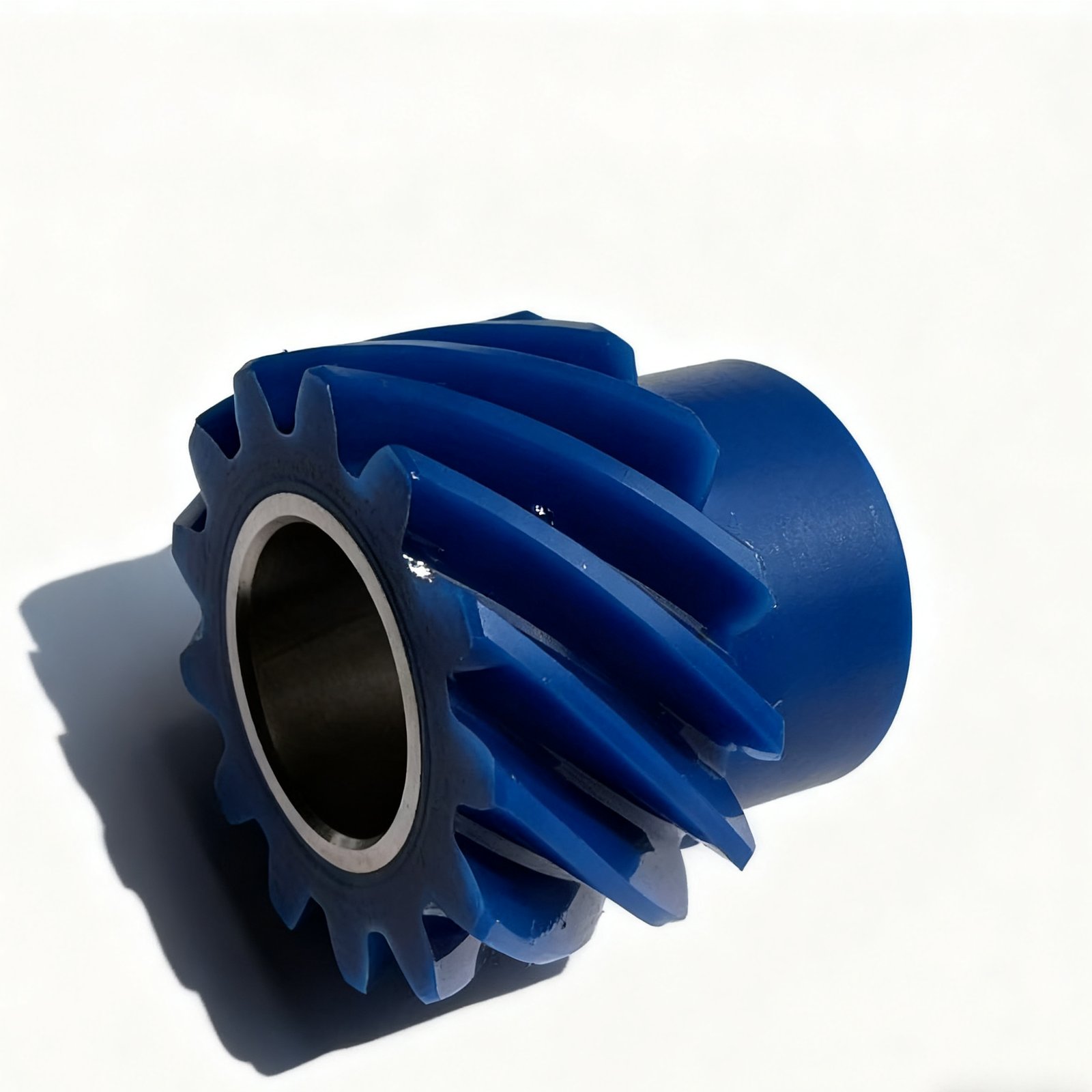
Geyontech precision gear engineering

Is Geyontech Right for Your Project?

We focus on demanding applications. If your priority is simply lowest price or very high volume of commodity gears, we may not be the best fit — and we will tell you honestly. If you need precision, consistency and engineering support, we are the right partner.

We are a good fit when you need:

  • High gear accuracy (grinding up to DIN 3)
  • Tight dimensional tolerances
  • Difficult materials & heat treatment
  • Complex gear geometry / low backlash / low noise
  • Small-batch engineering validation
  • Stable batch-to-batch quality
  • Custom transmission components
  • Engineering support & inspection documentation

We may not be the best fit for:

  • Lowest-price commodity gears
  • Extremely large-volume standard gears
  • Price-only purchasing projects

Products

Precision gears & transmission components

Spur & Helical Gears

High-precision ground gears, batch accuracy Grade 4~5, grinding up to DIN 3.

Bevel Gears

Straight and spiral bevel gears, precision milled and ground for high-speed, heavy-load drives.

Worm Gears & Worms

Precision worm gear sets, Z1~Z6 profiles, bronze wheel / steel worm, self-locking.

Custom Gears

Custom gears from drawings or samples, M0.3~M20, engineered to your requirements.

Gear Shafts & Splines

Gear shafts and splines, tolerance h6~h7, precision machined and ground.

📏

Racks & Linear Drives

Precision racks and linear transmission components.

🧲

Magnetic Drives

Zero-leakage magnetic couplings and drives for clean environments.

🔩

CNC Machined Parts

Custom precision-machined parts from drawings, fully inspected.

What We Deliver

🎯

Precision

Grinding accuracy up to DIN 3, controlled tolerances on every batch

📐

Consistency

Controlled batch-to-batch dimensional and gear accuracy

🔬

Engineering

Drawing review → process planning → prototype → validation → production

🔎

Inspection

Gear measuring center + CMM + hardness + surface inspection

🛡️

Reliability

Material traceability + process control + inspection reports

Engineered for Your Application

We solve transmission problems across demanding industries — not just supply standard parts.

🤖

Precision Gears for Robotics

High-accuracy, low-backlash gears for robot joints and precision motion.

⚙️

Low-Backlash Gears for Precision Motion

Tight backlash control for servo and positioning systems.

🏭

High-Load Gears for Industrial Gearboxes

Carburized, ground gears for heavy-duty transmission.

🔇

Low-Noise Gears for Precision Machinery

Controlled tooth geometry and surface finish for quiet operation.

🧲

Custom Gears for Vacuum Equipment

Clean-environment transmission, magnetic drives, special materials.

🔩

Transmission Components for Automation

Shafts, splines, racks and custom components with full documentation.

Explore All Industries

Technical Knowledge & Resources

In-depth articles on gear design, machining, heat treatment and inspection — engineering knowledge we share openly with designers and engineers.

📄
Process

Gear Manufacturing Processes: Hobbing & Grinding Core Technologies

Geyontech Daily Learning Session #3: Deep dive into gear hobbing (cutting parameters, accuracy grades, 3 common issues) and gear grinding (worm wheel/form/disc methods comparison, grinding burn control), with process chain precision transfer logic and practical insights.

📄
Design

Gear Design Fundamentals: Types & Module Selection

A beginner's guide to gear design covering classification (spur/helical/bevel/worm/planetary), module selection principles, pressure angle selection, profile shift applications, and practical insights with quick material-module reference tables.

📄
Materials

Gear Steel Selection & Heat Treatment Deformation Control

Deep-dive notes from Geyontech's knowledge base: gear steel selection logic (20CrMnTi/42CrMo/20CrNi2Mo comparison), heat treatment deformation types and root causes, practical control measures (pre-oxidation, quenching press, deep freezing), and the stress-deformation-precision triangle.

📄
Process

Gear Grinding Precision Control & Steel Selection Guide

In-depth grinding process guide: worm wheel vs form grinding comparison, grinding burn control, wheel dressing frequency and allowance allocation strategy; six common gear steel grades comparison table and selection logic; breakthrough directions for grinding efficiency vs precision balance (CBN wheels, in-process gauging, high-speed grinding).

Gear Precision Standard Guide: DIN, ISO, AGMA & GB Cross-Reference
Standards

Gear Precision Standard Guide: DIN, ISO, AGMA & GB Cross-Reference

A systematic guide to the four global gear precision standard systems (DIN/ISO/AGMA/GB) with grade comparison tables, speed-cost relationships, process chain matching, and export market best practices.

📄
Design

Gear Selection Guide: How to Choose the Right Gear Type for Your Application

A systematic gear selection guide covering spur, helical, bevel and worm gears — with selection logic based on speed, load, ratio, noise and spatial constraints. Includes decision flowchart, pitfall guide, FAQ and Geyontech's manufacturing capabilities.

📄
Process

Shot Peening: A 5× Gear Fatigue Life Multiplier

Shot peening creates residual compressive stress ≥800MPa on gear tooth surfaces, boosting fatigue life by 5-6×. Combine ISO 6336 with Geyontech's Q37 shot blasting capability.

📄
Process

Gear Processing Chain Deep Dive: Precision Evolution from Hobbing to Grinding

Deep analysis of precision transfer, allowance matching, and material selection across gear processing steps from hobbing to grinding, with detailed parameter tables

What is Gear Hobbing?
Heat Treatment

What is Gear Hobbing?

Gear hobbing is a machining process for cutting gear teeth using a rotating hob. It's the most efficient method for spur and helical gears.

Precision Grade Comparison Guide
Standards

Precision Grade Comparison Guide

A comprehensive comparison of DIN, ISO, AGMA and Chinese gear precision standards for international trade.

📄
Materials

Heat Treatment in Gear Manufacturing

Exploring carburizing, nitriding and induction hardening processes for optimal gear performance and service life.

📄
Design

How to Choose Gear Materials

Selecting between 20CrMnTi, 40Cr, 42CrMo and 45# steel based on application requirements and cost considerations.

📄
Process

Gear Grinding vs Shaving

Comparing gear grinding and shaving processes: precision levels, cost implications and application suitability.

Surface Treatment for Gears
Design

Surface Treatment for Gears

Phosphating, blackening and Dacromet treatments enhance corrosion resistance and reduce friction on gear surfaces.

📄
Process

Understanding Gear Backlash

The importance of backlash control in gear systems and how precision manufacturing minimizes transmission errors.

Gear Measurement Methods
Inspection

Gear Measurement Methods

Using gear measuring centers, CMM and vision systems to ensure gear quality meets international standards.

📄
Design

Custom Gear Design Tips

Key considerations for custom gear design: module selection, tooth profile optimization and material specification.

Maintenance Tips for Gears
Maintenance

Maintenance Tips for Gears

Proper lubrication, regular inspection and timely replacement extend gear service life and reduce downtime.

📄
Process

🎯 Daily Learning Notes — Gear Transmission & Precision Manufacturing

Industry trends in optical vs tactile gear measurement for E-Mobility, shot peening process parameters (Almen intensity, coverage, 5-6× fatigue life improvement), DIN gear precision standard grades and their corresponding manufacturing processes, and the strategic direction of "optical screening + tactile verification" hybrid measurement solutions.

📄
Process

📚 Daily Learning Notes — Gear Transmission & Precision Manufacturing

Modern gear transmission systems are shifting from traditional "meet strength requirements" to full lifecycle design based on fatigue life prediction. ISO 6336:2024 further refines permissible stress coefficients for tooth contact and root bending, with stronger emphasis on surface integrity — gear performance depends not only on design calculations but also on the actual effectiveness of surface strengthening processes (such as shot peening, carburizing, nitriding).

📄
Process

Gear Processing Chain Deep Analysis: Precision Evolution from Hobbing to Grinding

Geyontech Knowledge Base Issue #6 — Focusing on precision transfer and matching relationships across gear processing steps in the manufacturing chain, covering shaving allowance matching, carburizing and quenching four key parameters, and gear material selection quick-reference table.

📄
Process

Daily Learning Notes — Gear Grinding Process & Steel Material Selection

Gear grinding is the most mainstream finishing method for high-precision gears. DIN 3~6 grade precision is almost exclusively achieved through grinding. This article covers grinding process precision control, worm wheel vs form grinding comparison, grinding burn control, wheel dressing frequency and allowance allocation strategy, plus six common gear steel grades comparison table with selection logic.

📄
Process

Daily Learning: Gear Transmission & Precision Manufacturing | 2026-07-01

Core principle after reviewing the gear steel documentation in the knowledge base: **Material selection is not about strength alone — it is about matching.** Covers gear steel selection logic (20CrMnTi/42CrMo/20CrNi2Mo comparison), heat treatment deformation types and root cause analysis, practical control measures (pre-oxidation, quenching press, deep freezing), and the stress-deformation-precision triangle relationship.

📄
Process

[Geyontech](https://www.geyontech.com/en/about/) · Daily Learning Notes

Shot Peening continues to rise in importance in gear manufacturing. Knowledge base data shows carburized gears (20CrMnTi) have fatigue life of approximately 2×10⁶ cycles before peening, improving to 1×10⁷ cycles after peening — a 5× improvement. Medium-carbon Q&T gears (40Cr) improve from 1×10⁶ to 6×10⁶, a 6× improvement.

📄
Process

📚 Daily Learning Notes — Gear Design Fundamentals: Types & Module Selection

Module m = d/z (pitch diameter / number of teeth), the most fundamental gear parameter. Covers gear classification and selection (spur/helical/bevel/worm/planetary), module selection principles, pressure angle selection, profile shift gear applications, practical insights (pinion weak link, module selection pitfalls, internal vs external gears), and a quick-reference material pairing table.

📄
Process

📚 Daily Learning Notes — Gear Materials & Heat Treatment: Scientific Material Selection & Carburizing Process

Carburized gears account for over 80% of heavy-duty gears. The process route is: blanking → forging → normalizing → rough turning → semi-finish turning → hobbing → carburizing → quenching + low-temperature tempering → shot peening → finish grinding. Covers material classification, case depth selection formulas (δ ≈ 0.15~0.25 × m), consequences of incorrect case depth, core hardness control, and practical insights on 20CrMnTi, case depth myths, shot peening, and carbon potential control.

📄
Process

📚 Daily Learning Notes — Gear Manufacturing Processes: Hobbing & Grinding

Hobbing is the most widely used gear roughing process, covering over 70% of gear roughing operations. This note explains cutting parameters, precision grades and common quality issues.

📄
Process

Daily Learning Note — Gear Heat Treatment Processes

Heat treatment processes for gears — carburizing, quenching, tempering and nitriding. Key parameters, applicable materials and hardness results for each process.

📄
Process

Gear Carburizing & Quenching Hardening: Core Methods for Deep Case Uniformity and Distortion Control

Carburizing and quenching feeds carbon atoms into the surface layer of low-carbon steel (0.10%–0.25%C) in a carbon-rich atmosphere, then quenches and tempers to form a **gradient structure of high-car

📄
Process

Gear Material Selection & Heat Treatment Optimization — A Practical Guide

38CrMoAl after nitriding reaches **900-1100 HV** (~65-70 HRC) surface hardness — extremely wear-resistant but with a thin case (0.3-0.6mm), ideal for precision gears. GCr15 bearing steel (60-65 HRC) s

📄
Design

Gear Drive Selection Guide: Spur, Helical, Bevel & Worm Gear Complete Analysis

Geyontech's in-depth analysis of four gear drive types (spur, helical, bevel, worm gear) covering engineering data, manufacturing processes, and selection criteria for optimized precision transmission solutions.

📄
Design

⚙️ Gear Precision Standard Guide: How to Cross-Reference DIN, ISO, AGMA & GB?

A systematic guide to the four global gear precision standard systems (DIN/ISO/AGMA/GB) with grade comparison tables, speed-cost relationships, process chain matching best practices, and export market recommendations.

📄
Design

⚙️ Gear Selection Guide: How to Choose the Right Gear Type for Your Application

A systematic gear selection guide covering spur, helical, bevel and worm gears — with selection logic based on speed, load, gear ratio, noise and spatial constraints. Includes decision workflow, selection tables, manufacturing capabilities and export considerations.

📄
Process

Gear Carburizing & Quenching: Controlling the Effective Case Depth for Optimal Performance

Effective case depth \( DS = k \times \sqrt{t} \)

📄
Design

How Much Quieter Are Helical Gears Than Spur Gears? — Precision Manufacturing and Selection Guide

In mechanical power transmission, **helical gears outperform spur gears in smoothness, load capacity, and noise reduction** due to their angled tooth design. With teeth engaging gradually rather than

📄
Process

Gear Carburizing & Quenching: Principles, Parameter Control, and Defect Prevention

- **Decomposition stage:** Carburizing media (natural gas, propane, or kerosene) cracks at high temperature to produce active carbon atoms

📄
Process

Gear Carburizing & Quenching: From Theory to Production Practice

$$d = (0.1 \sim 0.2) \times m_n$$

📄
Process

Gear Accuracy Standards & Inspection: ISO 1328:2013 System and Practical Measurement Methods

ISO Grades 0–2: Precision instrument gears; Grades 3–5: High-speed gearboxes/aerospace gears; **Grades 6–8: Industrial gearbox gears (most common range)**; Grades 9–12: Low-speed rough drives.

📄
Process

Gear Hobbing Process: Principles, Cutting Parameters & Precision Control

\[

📄
Process

Carburizing & Quenching for Gears: Key Parameters and Quality Control

At Geyon Transmission, all [high-precision heavy-duty gear](/en/capabilities/) projects strictly follow ISO 6336-5 requirements for case hardness quality assessment.

📄
Process

Deep Case Carburizing for Gears: Process Parameters and Deformation Control

- **18CrNiMo7-6** — wind turbine gearbox primary material

📄
Process

Gear Carburizing & Quenching: Parameter Control and Distortion Management for Case-Hardened Transmission Gears

Definition: The perpendicular distance from the gear surface to where hardness reaches 550 HV. Typical engineering ranges:

📄
Process

Case Hardening vs Through-Hardening Steel: The Core Decision in Gear Material Selection

date: 2026-07-22

📄
Process

Gear Accuracy Grades & Inspection — From Standard Selection to Quality Control

Per ISO 1328, three key single-index parameters define gear accuracy:

📄
Process

Gear Carburizing & Quenching Distortion Control: From Theory to Practice — A Complete Technical Guide

- **Thermal stress distortion**: Differential expansion/contraction from non-uniform heating and cooling

📄
Process

Gear Material Selection Guide: From 20CrMnTi to 42CrMo — Engineering Decision Framework

- **Typical grades**: 20CrMnTi, 20CrMo, 20CrNiMo

📄
Process

Gear Precision Inspection Complete Guide: ISO 1328 vs AGMA 2015 — Choosing the Best Inspection Strategy

title: "Gear Precision Inspection Complete Guide: ISO 1328 vs AGMA 2015 — Choosing the Best Inspection Strategy"

📄
Design

How Much Quieter Are Helical Gears Than Spur Gears? — Precision Helical Gear Manufacturing & Selection Guide

Gear transmission is the core foundation of the mechanical industry, and among all gear types, **helical gears stand out for their smooth meshing, high load-carrying capacity, and low noise**, making

📄
Design

Spur Gear or Helical Gear — How to Choose? One Table to Understand the Differences in Transmission Accuracy, Noise, and Load Capacity

Select the service factor KA based on the types of prime mover and driven machine (usually 1.0–2.0). Calculation formulas:

📄
Design

Why Are Helical Gears More Efficient Than Spur Gears? — A Complete Guide to Design Parameters, Manufacturing Processes, and Selection

The most essential difference between helical gears and spur gears lies in the **direction of the tooth trace**: spur gear teeth are parallel to the axis, and the full face width contacts instantaneou

📄
Design

Why Do Gears Need Heat Treatment? Carburizing vs. Nitriding vs. Induction Hardening — Hardness, Cost & Life Data Compared

Gears fail in three main modes: **tooth pitting** (contact fatigue), **tooth-root bending fatigue fracture**, and **wear/scuffing**. Heat treatment directly determines gear life by raising both surfac

📄
Industry News

Global Power Transmission Gear Market Grows 8.3% in H1 2026 — Precision Manufacturing and Electrification Reshape the Industry

According to data released by the American Gear Manufacturers Association (AGMA) in June 2026, the global power transmission gear market reached US$68.2 billion in H1 2026. The Asia-Pacific region con

📄
Industry News

Harmonic Reducer Localization Rate Breaks 45%: Top 10 Gear Industry Trends in Q2 2026

According to the latest July 2026 data from the China Robot Industry Alliance (CRIA), domestic harmonic reducer localization has reached 45.3% — a 12-percentage-point increase from the same period in

📄
Process

Profile-Shifted Gear Design: How the Profile Shift Coefficient Balances Tooth Root Strength, Contact Ratio, and Specific Sliding

The profile shift coefficient (x) is the core design parameter that simultaneously governs tooth root bending strength, flank contact strength, contact ratio, and specific sliding. With the standard pressure angle α=20° and addendum coefficient ha*=1, gears with fewer than 17 teeth must use positive profile shift to avoid undercut. At a fixed center distance, positive shift can raise tooth root bending strength by approximately 15%–25%, while reducing the contact ratio by about 5%–10%. In engineering practice, x = 0.3–0.5 is the common range that balances strength and running smoothness; negative shift is reserved for center-distance adjustment or specific-sliding balancing.

📄
Process

How Gear Grinding Reaches ISO Grade 5: Form Grinding vs Generating Grinding

Gear grinding is the finishing process applied after heat treatment to correct hardening distortion and bring hardened tooth flanks to ISO 1328-1 Grade 5, with profile deviation fα ≤ 5 μm and surface roughness Ra 0.2–0.8 μm. Two routes dominate: generating grinding with a threaded (worm) wheel cuts continuously and suits modules 0.5–8 mm, cutting per-piece cost roughly 20%–30% below form grinding in batch production; form grinding with a dressed profile wheel cuts tooth by tooth and suits large modules (mn ≥ 6 mm), low tooth counts, and special profiles. Choose based on three things: module, batch size, and profile complexity.

📄
Design

Gear Hobbing vs. Shaving vs. Grinding: How Many DIN Grades Apart? (Accuracy & Cost Data)

# Gear Hobbing vs. Shaving vs. Grinding: How Many DIN Grades Apart? (Accuracy & Cost Data) > **Core answer**: When a gear misses its drawing tolerance, the process choice is usually the cause. Hobbin

📄
Process

How to Choose Gear Oil: Film Thickness Ratio λ, ISO VG Grades, and EP Additives

ISO 12925-1 groups industrial gear oils into CKB, CKC, CKD, CKE and similar categories by load and duty. Viscosity selection comes down to two numbers: pitch line speed and contact stress.

📄
Process

How Deep Should the Hardened Case Be? Matching CHD, Module, and Core Hardness for Carburized Gears

--- title: "How Deep Should the Hardened Case Be? Matching CHD, Module, and Core Hardness for Carburized Gears" date: 2026-08-14 tags: [gear heat treatment, carburizing, case hardening depth, CHD, cor

📄
Industry News

Humanoid Robot Output Ramps Up, Precision Gear Orders Booked into 2027

NBS data puts China's industrial robot output at about 360,000 units in H1 2026, up roughly 8% year on year, following about 670,000 units for all of 2025. The growth is concentrated in 3C electronics

📄
Design

What Module Do You Need for 15 kW at 1450 rpm? — An ISO 6336 Strength Calculation Walkthrough with Material Data

# What Module Do You Need for 15 kW at 1450 rpm? — An ISO 6336 Strength Calculation Walkthrough with Material Data > **Core answer**: Module size is decided by strength calculation, not gut feel. For

📄
Process

How to Read a Gear Inspection Report: What Fp, fpt, fα and fβ from ISO 1328-1 Control

--- title: "How to Read a Gear Inspection Report: What Fp, fpt, fα and fβ from ISO 1328-1 Control" date: 2026-08-18 tags: [gear inspection, ISO 1328-1, total cumulative pitch deviation, profile deviat

📄
Process

How to Choose Gear Material: Where 20CrMnTi, 40Cr, 42CrMo and 17CrNiMo6 Each Fit

--- title: "How to Choose Gear Material: Where 20CrMnTi, 40Cr, 42CrMo and 17CrNiMo6 Each Fit" date: 2026-08-21 tags: [gear material, 20CrMnTi, 40Cr, 42CrMo, carburizing steel, quench and temper steel,

📄
Industry News

Wind Capacity Returns to Growth, New-Energy Transmission Orders Warm Up

By NEA figures, China added roughly 80 GW of grid-connected wind in 2025, roughly flat against 2024, and cumulative capacity reached about 600 GW by end-2025. Turbine tendering stayed strong in H1 202

📄
Design

Why Do Gears Fail — Pitting, Scuffing, Wear and Tooth Breakage? Stress Data and Countermeasures

# Why Do Gears Fail — Pitting, Scuffing, Wear and Tooth Breakage? Stress Data and Countermeasures > **Core answer: Gear damage falls into four modes — pitting, scuffing, abrasive wear and tooth break

📄
Process

Undercut and Contact Ratio in Involute Gears: Why z Below 17 Costs You, and Why εα Should Sit Above 1.2

--- title: "Undercut and Contact Ratio in Involute Gears: Why z Below 17 Costs You, and Why εα Should Sit Above 1.2" date: 2026-08-25 tags: [gear design, undercut, contact ratio, minimum tooth number,

📄
Design

齿轮回差多少算"低"?DIN 3967 齿厚公差与磨齿工艺怎么配合

[EN translation needed: geyontech_技术文章_20260901]

📄
Industry News

齿轮精度标准密集换版:ISO 1328-2:2020 落地,出口验收口径有变

[EN translation needed: geyontech_行业资讯_20260828]

📄
Industry News

齿轮总坏?90%是润滑没做对!4招让设备寿命翻倍

[EN translation needed: 格扬百家号_齿轮润滑维护_20260801]

📄
Industry News

齿轮强度计算参考

[EN translation needed: 01_齿轮强度计算]

📄
Process

Gear Manufacturing Processes: Hobbing & Grinding Core Technologies

Geyontech Daily Learning Session #3: Deep dive into gear hobbing (cutting parameters, accuracy grades, 3 common issues) and gear grinding (worm wheel/form/disc methods comparison, grinding burn control), with process chain precision transfer logic and practical insights.

📄
Design

Gear Design Fundamentals: Types & Module Selection

A beginner's guide to gear design covering classification (spur/helical/bevel/worm/planetary), module selection principles, pressure angle selection, profile shift applications, and practical insights with quick material-module reference tables.

📄
Materials

Gear Steel Selection & Heat Treatment Deformation Control

Deep-dive notes from Geyontech's knowledge base: gear steel selection logic (20CrMnTi/42CrMo/20CrNi2Mo comparison), heat treatment deformation types and root causes, practical control measures (pre-oxidation, quenching press, deep freezing), and the stress-deformation-precision triangle.

📄
Process

Gear Grinding Precision Control & Steel Selection Guide

In-depth grinding process guide: worm wheel vs form grinding comparison, grinding burn control, wheel dressing frequency and allowance allocation strategy; six common gear steel grades comparison table and selection logic; breakthrough directions for grinding efficiency vs precision balance (CBN wheels, in-process gauging, high-speed grinding).

Gear Precision Standard Guide: DIN, ISO, AGMA & GB Cross-Reference
Standards

Gear Precision Standard Guide: DIN, ISO, AGMA & GB Cross-Reference

A systematic guide to the four global gear precision standard systems (DIN/ISO/AGMA/GB) with grade comparison tables, speed-cost relationships, process chain matching, and export market best practices.

📄
Design

Gear Selection Guide: How to Choose the Right Gear Type for Your Application

A systematic gear selection guide covering spur, helical, bevel and worm gears — with selection logic based on speed, load, ratio, noise and spatial constraints. Includes decision flowchart, pitfall guide, FAQ and Geyontech's manufacturing capabilities.

📄
Process

Shot Peening: A 5× Gear Fatigue Life Multiplier

Shot peening creates residual compressive stress ≥800MPa on gear tooth surfaces, boosting fatigue life by 5-6×. Combine ISO 6336 with Geyontech's Q37 shot blasting capability.

📄
Process

Gear Processing Chain Deep Dive: Precision Evolution from Hobbing to Grinding

Deep analysis of precision transfer, allowance matching, and material selection across gear processing steps from hobbing to grinding, with detailed parameter tables

What is Gear Hobbing?
Heat Treatment

What is Gear Hobbing?

Gear hobbing is a machining process for cutting gear teeth using a rotating hob. It's the most efficient method for spur and helical gears.

Precision Grade Comparison Guide
Standards

Precision Grade Comparison Guide

A comprehensive comparison of DIN, ISO, AGMA and Chinese gear precision standards for international trade.

📄
Materials

Heat Treatment in Gear Manufacturing

Exploring carburizing, nitriding and induction hardening processes for optimal gear performance and service life.

📄
Design

How to Choose Gear Materials

Selecting between 20CrMnTi, 40Cr, 42CrMo and 45# steel based on application requirements and cost considerations.

📄
Process

Gear Grinding vs Shaving

Comparing gear grinding and shaving processes: precision levels, cost implications and application suitability.

Surface Treatment for Gears
Design

Surface Treatment for Gears

Phosphating, blackening and Dacromet treatments enhance corrosion resistance and reduce friction on gear surfaces.

📄
Process

Understanding Gear Backlash

The importance of backlash control in gear systems and how precision manufacturing minimizes transmission errors.

Gear Measurement Methods
Inspection

Gear Measurement Methods

Using gear measuring centers, CMM and vision systems to ensure gear quality meets international standards.

📄
Design

Custom Gear Design Tips

Key considerations for custom gear design: module selection, tooth profile optimization and material specification.

Maintenance Tips for Gears
Maintenance

Maintenance Tips for Gears

Proper lubrication, regular inspection and timely replacement extend gear service life and reduce downtime.

📄
Process

🎯 Daily Learning Notes — Gear Transmission & Precision Manufacturing

Industry trends in optical vs tactile gear measurement for E-Mobility, shot peening process parameters (Almen intensity, coverage, 5-6× fatigue life improvement), DIN gear precision standard grades and their corresponding manufacturing processes, and the strategic direction of "optical screening + tactile verification" hybrid measurement solutions.

📄
Process

📚 Daily Learning Notes — Gear Transmission & Precision Manufacturing

Modern gear transmission systems are shifting from traditional "meet strength requirements" to full lifecycle design based on fatigue life prediction. ISO 6336:2024 further refines permissible stress coefficients for tooth contact and root bending, with stronger emphasis on surface integrity — gear performance depends not only on design calculations but also on the actual effectiveness of surface strengthening processes (such as shot peening, carburizing, nitriding).

📄
Process

Gear Processing Chain Deep Analysis: Precision Evolution from Hobbing to Grinding

Geyontech Knowledge Base Issue #6 — Focusing on precision transfer and matching relationships across gear processing steps in the manufacturing chain, covering shaving allowance matching, carburizing and quenching four key parameters, and gear material selection quick-reference table.

📄
Process

Daily Learning Notes — Gear Grinding Process & Steel Material Selection

Gear grinding is the most mainstream finishing method for high-precision gears. DIN 3~6 grade precision is almost exclusively achieved through grinding. This article covers grinding process precision control, worm wheel vs form grinding comparison, grinding burn control, wheel dressing frequency and allowance allocation strategy, plus six common gear steel grades comparison table with selection logic.

📄
Process

Daily Learning: Gear Transmission & Precision Manufacturing | 2026-07-01

Core principle after reviewing the gear steel documentation in the knowledge base: **Material selection is not about strength alone — it is about matching.** Covers gear steel selection logic (20CrMnTi/42CrMo/20CrNi2Mo comparison), heat treatment deformation types and root cause analysis, practical control measures (pre-oxidation, quenching press, deep freezing), and the stress-deformation-precision triangle relationship.

📄
Process

[Geyontech](https://www.geyontech.com/en/about/) · Daily Learning Notes

Shot Peening continues to rise in importance in gear manufacturing. Knowledge base data shows carburized gears (20CrMnTi) have fatigue life of approximately 2×10⁶ cycles before peening, improving to 1×10⁷ cycles after peening — a 5× improvement. Medium-carbon Q&T gears (40Cr) improve from 1×10⁶ to 6×10⁶, a 6× improvement.

📄
Process

📚 Daily Learning Notes — Gear Design Fundamentals: Types & Module Selection

Module m = d/z (pitch diameter / number of teeth), the most fundamental gear parameter. Covers gear classification and selection (spur/helical/bevel/worm/planetary), module selection principles, pressure angle selection, profile shift gear applications, practical insights (pinion weak link, module selection pitfalls, internal vs external gears), and a quick-reference material pairing table.

📄
Process

📚 Daily Learning Notes — Gear Materials & Heat Treatment: Scientific Material Selection & Carburizing Process

Carburized gears account for over 80% of heavy-duty gears. The process route is: blanking → forging → normalizing → rough turning → semi-finish turning → hobbing → carburizing → quenching + low-temperature tempering → shot peening → finish grinding. Covers material classification, case depth selection formulas (δ ≈ 0.15~0.25 × m), consequences of incorrect case depth, core hardness control, and practical insights on 20CrMnTi, case depth myths, shot peening, and carbon potential control.

📄
Process

📚 Daily Learning Notes — Gear Manufacturing Processes: Hobbing & Grinding

Hobbing is the most widely used gear roughing process, covering over 70% of gear roughing operations. This note explains cutting parameters, precision grades and common quality issues.

📄
Process

Daily Learning Note — Gear Heat Treatment Processes

Heat treatment processes for gears — carburizing, quenching, tempering and nitriding. Key parameters, applicable materials and hardness results for each process.

📄
Process

Gear Carburizing & Quenching Hardening: Core Methods for Deep Case Uniformity and Distortion Control

Carburizing and quenching feeds carbon atoms into the surface layer of low-carbon steel (0.10%–0.25%C) in a carbon-rich atmosphere, then quenches and tempers to form a **gradient structure of high-car

📄
Process

Gear Material Selection & Heat Treatment Optimization — A Practical Guide

38CrMoAl after nitriding reaches **900-1100 HV** (~65-70 HRC) surface hardness — extremely wear-resistant but with a thin case (0.3-0.6mm), ideal for precision gears. GCr15 bearing steel (60-65 HRC) s

📄
Design

Gear Drive Selection Guide: Spur, Helical, Bevel & Worm Gear Complete Analysis

Geyontech's in-depth analysis of four gear drive types (spur, helical, bevel, worm gear) covering engineering data, manufacturing processes, and selection criteria for optimized precision transmission solutions.

📄
Design

⚙️ Gear Precision Standard Guide: How to Cross-Reference DIN, ISO, AGMA & GB?

A systematic guide to the four global gear precision standard systems (DIN/ISO/AGMA/GB) with grade comparison tables, speed-cost relationships, process chain matching best practices, and export market recommendations.

📄
Design

⚙️ Gear Selection Guide: How to Choose the Right Gear Type for Your Application

A systematic gear selection guide covering spur, helical, bevel and worm gears — with selection logic based on speed, load, gear ratio, noise and spatial constraints. Includes decision workflow, selection tables, manufacturing capabilities and export considerations.

📄
Process

Gear Carburizing & Quenching: Controlling the Effective Case Depth for Optimal Performance

Effective case depth \( DS = k \times \sqrt{t} \)

📄
Design

How Much Quieter Are Helical Gears Than Spur Gears? — Precision Manufacturing and Selection Guide

In mechanical power transmission, **helical gears outperform spur gears in smoothness, load capacity, and noise reduction** due to their angled tooth design. With teeth engaging gradually rather than

📄
Process

Gear Carburizing & Quenching: Principles, Parameter Control, and Defect Prevention

- **Decomposition stage:** Carburizing media (natural gas, propane, or kerosene) cracks at high temperature to produce active carbon atoms

📄
Process

Gear Carburizing & Quenching: From Theory to Production Practice

$$d = (0.1 \sim 0.2) \times m_n$$

📄
Process

Gear Accuracy Standards & Inspection: ISO 1328:2013 System and Practical Measurement Methods

ISO Grades 0–2: Precision instrument gears; Grades 3–5: High-speed gearboxes/aerospace gears; **Grades 6–8: Industrial gearbox gears (most common range)**; Grades 9–12: Low-speed rough drives.

📄
Process

Gear Hobbing Process: Principles, Cutting Parameters & Precision Control

\[

📄
Process

Carburizing & Quenching for Gears: Key Parameters and Quality Control

At Geyon Transmission, all [high-precision heavy-duty gear](/en/capabilities/) projects strictly follow ISO 6336-5 requirements for case hardness quality assessment.

📄
Process

Deep Case Carburizing for Gears: Process Parameters and Deformation Control

- **18CrNiMo7-6** — wind turbine gearbox primary material

📄
Process

Gear Carburizing & Quenching: Parameter Control and Distortion Management for Case-Hardened Transmission Gears

Definition: The perpendicular distance from the gear surface to where hardness reaches 550 HV. Typical engineering ranges:

📄
Process

Case Hardening vs Through-Hardening Steel: The Core Decision in Gear Material Selection

date: 2026-07-22

📄
Process

Gear Accuracy Grades & Inspection — From Standard Selection to Quality Control

Per ISO 1328, three key single-index parameters define gear accuracy:

📄
Process

Gear Carburizing & Quenching Distortion Control: From Theory to Practice — A Complete Technical Guide

- **Thermal stress distortion**: Differential expansion/contraction from non-uniform heating and cooling

📄
Process

Gear Material Selection Guide: From 20CrMnTi to 42CrMo — Engineering Decision Framework

- **Typical grades**: 20CrMnTi, 20CrMo, 20CrNiMo

📄
Process

Gear Precision Inspection Complete Guide: ISO 1328 vs AGMA 2015 — Choosing the Best Inspection Strategy

title: "Gear Precision Inspection Complete Guide: ISO 1328 vs AGMA 2015 — Choosing the Best Inspection Strategy"

📄
Design

How Much Quieter Are Helical Gears Than Spur Gears? — Precision Helical Gear Manufacturing & Selection Guide

Gear transmission is the core foundation of the mechanical industry, and among all gear types, **helical gears stand out for their smooth meshing, high load-carrying capacity, and low noise**, making

📄
Design

Spur Gear or Helical Gear — How to Choose? One Table to Understand the Differences in Transmission Accuracy, Noise, and Load Capacity

Select the service factor KA based on the types of prime mover and driven machine (usually 1.0–2.0). Calculation formulas:

📄
Design

Why Are Helical Gears More Efficient Than Spur Gears? — A Complete Guide to Design Parameters, Manufacturing Processes, and Selection

The most essential difference between helical gears and spur gears lies in the **direction of the tooth trace**: spur gear teeth are parallel to the axis, and the full face width contacts instantaneou

📄
Design

Why Do Gears Need Heat Treatment? Carburizing vs. Nitriding vs. Induction Hardening — Hardness, Cost & Life Data Compared

Gears fail in three main modes: **tooth pitting** (contact fatigue), **tooth-root bending fatigue fracture**, and **wear/scuffing**. Heat treatment directly determines gear life by raising both surfac

📄
Industry News

Global Power Transmission Gear Market Grows 8.3% in H1 2026 — Precision Manufacturing and Electrification Reshape the Industry

According to data released by the American Gear Manufacturers Association (AGMA) in June 2026, the global power transmission gear market reached US$68.2 billion in H1 2026. The Asia-Pacific region con

📄
Industry News

Harmonic Reducer Localization Rate Breaks 45%: Top 10 Gear Industry Trends in Q2 2026

According to the latest July 2026 data from the China Robot Industry Alliance (CRIA), domestic harmonic reducer localization has reached 45.3% — a 12-percentage-point increase from the same period in

📄
Process

Profile-Shifted Gear Design: How the Profile Shift Coefficient Balances Tooth Root Strength, Contact Ratio, and Specific Sliding

The profile shift coefficient (x) is the core design parameter that simultaneously governs tooth root bending strength, flank contact strength, contact ratio, and specific sliding. With the standard pressure angle α=20° and addendum coefficient ha*=1, gears with fewer than 17 teeth must use positive profile shift to avoid undercut. At a fixed center distance, positive shift can raise tooth root bending strength by approximately 15%–25%, while reducing the contact ratio by about 5%–10%. In engineering practice, x = 0.3–0.5 is the common range that balances strength and running smoothness; negative shift is reserved for center-distance adjustment or specific-sliding balancing.

📄
Process

How Gear Grinding Reaches ISO Grade 5: Form Grinding vs Generating Grinding

Gear grinding is the finishing process applied after heat treatment to correct hardening distortion and bring hardened tooth flanks to ISO 1328-1 Grade 5, with profile deviation fα ≤ 5 μm and surface roughness Ra 0.2–0.8 μm. Two routes dominate: generating grinding with a threaded (worm) wheel cuts continuously and suits modules 0.5–8 mm, cutting per-piece cost roughly 20%–30% below form grinding in batch production; form grinding with a dressed profile wheel cuts tooth by tooth and suits large modules (mn ≥ 6 mm), low tooth counts, and special profiles. Choose based on three things: module, batch size, and profile complexity.

📄
Design

Gear Hobbing vs. Shaving vs. Grinding: How Many DIN Grades Apart? (Accuracy & Cost Data)

# Gear Hobbing vs. Shaving vs. Grinding: How Many DIN Grades Apart? (Accuracy & Cost Data) > **Core answer**: When a gear misses its drawing tolerance, the process choice is usually the cause. Hobbin

📄
Process

How to Choose Gear Oil: Film Thickness Ratio λ, ISO VG Grades, and EP Additives

ISO 12925-1 groups industrial gear oils into CKB, CKC, CKD, CKE and similar categories by load and duty. Viscosity selection comes down to two numbers: pitch line speed and contact stress.

📄
Process

How Deep Should the Hardened Case Be? Matching CHD, Module, and Core Hardness for Carburized Gears

--- title: "How Deep Should the Hardened Case Be? Matching CHD, Module, and Core Hardness for Carburized Gears" date: 2026-08-14 tags: [gear heat treatment, carburizing, case hardening depth, CHD, cor

📄
Industry News

Humanoid Robot Output Ramps Up, Precision Gear Orders Booked into 2027

NBS data puts China's industrial robot output at about 360,000 units in H1 2026, up roughly 8% year on year, following about 670,000 units for all of 2025. The growth is concentrated in 3C electronics

📄
Design

What Module Do You Need for 15 kW at 1450 rpm? — An ISO 6336 Strength Calculation Walkthrough with Material Data

# What Module Do You Need for 15 kW at 1450 rpm? — An ISO 6336 Strength Calculation Walkthrough with Material Data > **Core answer**: Module size is decided by strength calculation, not gut feel. For

📄
Process

How to Read a Gear Inspection Report: What Fp, fpt, fα and fβ from ISO 1328-1 Control

--- title: "How to Read a Gear Inspection Report: What Fp, fpt, fα and fβ from ISO 1328-1 Control" date: 2026-08-18 tags: [gear inspection, ISO 1328-1, total cumulative pitch deviation, profile deviat

📄
Process

How to Choose Gear Material: Where 20CrMnTi, 40Cr, 42CrMo and 17CrNiMo6 Each Fit

--- title: "How to Choose Gear Material: Where 20CrMnTi, 40Cr, 42CrMo and 17CrNiMo6 Each Fit" date: 2026-08-21 tags: [gear material, 20CrMnTi, 40Cr, 42CrMo, carburizing steel, quench and temper steel,

📄
Industry News

Wind Capacity Returns to Growth, New-Energy Transmission Orders Warm Up

By NEA figures, China added roughly 80 GW of grid-connected wind in 2025, roughly flat against 2024, and cumulative capacity reached about 600 GW by end-2025. Turbine tendering stayed strong in H1 202

📄
Design

Why Do Gears Fail — Pitting, Scuffing, Wear and Tooth Breakage? Stress Data and Countermeasures

# Why Do Gears Fail — Pitting, Scuffing, Wear and Tooth Breakage? Stress Data and Countermeasures > **Core answer: Gear damage falls into four modes — pitting, scuffing, abrasive wear and tooth break

📄
Process

Undercut and Contact Ratio in Involute Gears: Why z Below 17 Costs You, and Why εα Should Sit Above 1.2

--- title: "Undercut and Contact Ratio in Involute Gears: Why z Below 17 Costs You, and Why εα Should Sit Above 1.2" date: 2026-08-25 tags: [gear design, undercut, contact ratio, minimum tooth number,

📄
Design

齿轮回差多少算"低"?DIN 3967 齿厚公差与磨齿工艺怎么配合

[EN translation needed: geyontech_技术文章_20260901]

📄
Industry News

齿轮精度标准密集换版:ISO 1328-2:2020 落地,出口验收口径有变

[EN translation needed: geyontech_行业资讯_20260828]

📄
Industry News

齿轮总坏?90%是润滑没做对!4招让设备寿命翻倍

[EN translation needed: 格扬百家号_齿轮润滑维护_20260801]

📄
Industry News

齿轮强度计算参考

[EN translation needed: 01_齿轮强度计算]

Browse Full Technical Library →

Engineering Tools & Technical Support

Free online gear engineering tools for designers — calculate, verify, then send us your requirements for engineering review.

🧮

Gear Calculators

Module calculation, gear strength verification, transmission ratio, center distance, tooth profile parameters.

Try Gear Calculators →
🛠️

Technical Support

Gear selection guidance, design review, material and heat treatment advice from our engineering team.

Request Engineering Review →

Contact Us

Geyontech

  • 📍 Building 1, No.63 Lianhu Road, Chang'an, Dongguan, China
  • 📞 +86 18002857601 (Mr. Pan)
  • 📞 +86 18679608291 (Mr. Gao)
  • Sales@geyontech.com
  • 🌐 www.geyontech.com